




 Back to Blogs

What Cultures & Traditions should one want to experience when visting Malta?
Ancient heritage and Mediterranean charm
The Maltese archipelago boasts a rich history that spans over more than 7,000 years. Despite its small size, Malta is home to a diverse and vibrant culture, shaped by the various civilisations that have ruled its shores. From the Phoenicians to the Romans, the Arabs, the Normans, the Knights of St. John, the French and the British, each civilisation left an indelible mark on the island’s cultural fabric. Today, Maltese culture is an enchanting blend of ancient traditions, religious fervour and Mediterranean warmth.
Malta’s historical roots reflects an intricate mix of influences
The culture of Malta is intrinsically linked to its history. The Maltese archipelago, which consists of Malta, Gozo and Comino, has been inhabited since prehistoric times. The Ġgantija temples on Gozo, dating back to around 3600 BC, are among the oldest free-standing structures in the world, surpassing even Stonehenge and the Pyramids of Giza. These ancient temples reflect the deep spiritual roots of the Maltese people.
Throughout its history, Malta’s strategic location in the Mediterranean made it a desirable prize for various powers. The Phoenicians and Romans, who ruled the island for centuries, introduced Mediterranean customs, language and trade. The Arab rule, starting in 870 AD, had a lasting impact, particularly on the Maltese language, which is unique in that it is the only Semitic language written in the Latin script. Maltese remains the island’s official language alongside English, with influences from Italian and Arabic visible in its vocabulary and syntax.
The arrival of the Knights of St. John in 1530 heralded a golden age in Maltese history. The Knights built the fortified city of Valletta, now a UNESCO World Heritage Site and turned the island into a cultural and artistic hub. Under their reign, the island flourished, with Baroque architecture, grand churches and a thriving art scene that endures to this day. Malta’s cultural richness is thus a testament to its complex history, where influences from North Africa, Europe and the Middle East converge.
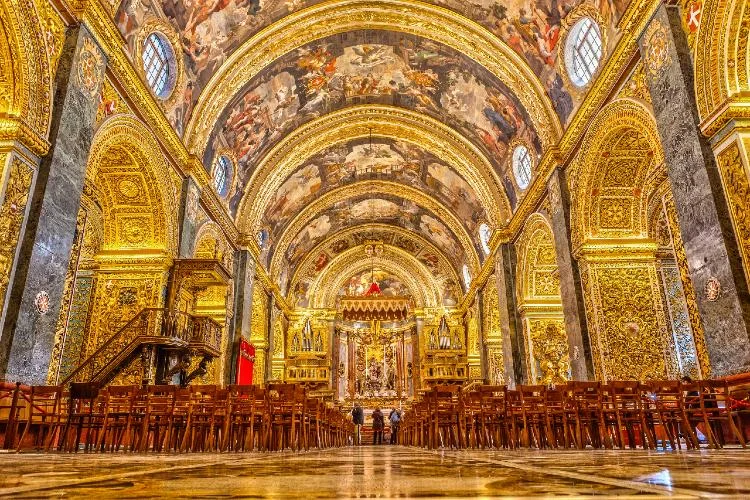
The role of religion in Maltese life
Religion plays an essential role in Maltese culture, with Roman Catholicism deeply ingrained in the national identity. Around 98% of the population identifies as Catholic and the Church wields significant influence over both public and private life. Malta’s devout nature is reflected in its architecture, with over 350 churches scattered across the islands. Many of these churches, such as St. John’s Co-Cathedral in Valletta and the Mosta Dome, are stunning examples of Baroque architecture and are integral to the island’s cultural and religious life.
Religious festivals, known locally as festas, are a highlight of Maltese life. Each town and village has its patron saint and the annual festa is a grand affair, marked by processions, brass bands, fireworks and feasting. Streets are festooned with colourful decorations and the local church is the focal point of the celebrations. These festas bring communities together in displays of faith, but they are also lively social events, where religion blends seamlessly with festivity. The Feast of St. Paul’s Shipwreck and the Feast of St. Peter and St. Paul (known as L-Imnarja) are two of the most significant religious events, attracting thousands of devotees and tourists alike.
Malta’s religious heritage is also visible in its many religious traditions and rituals. Good Friday and Easter processions are solemn occasions, with towns across Malta and Gozo hosting dramatic re-enactments of the Passion of Christ. Statues are carried through the streets, accompanied by locals dressed in biblical attire, in a moving expression of faith.
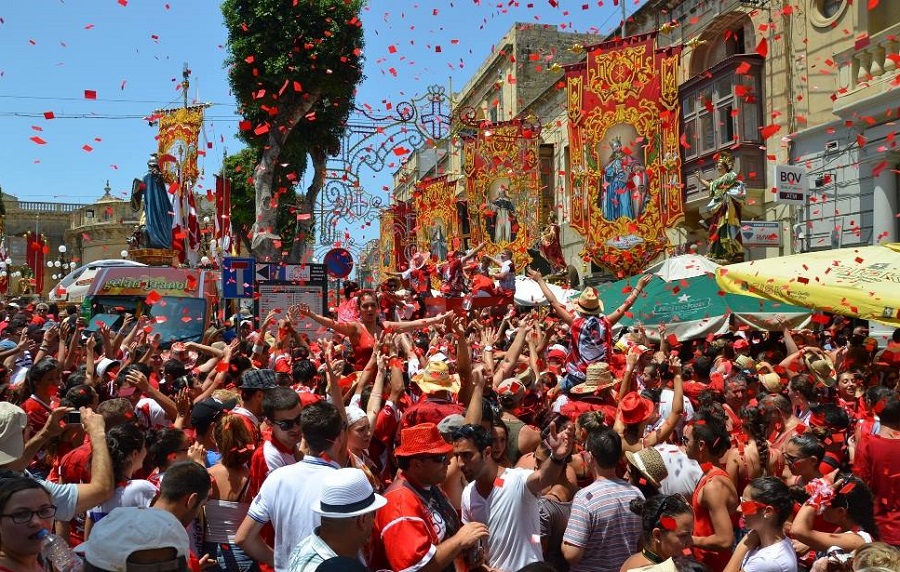
Traditional Maltese festivals and celebrations
Beyond the religious festas, Malta hosts a variety of traditional festivals and celebrations that reflect the island’s rich cultural tapestry. One of the most important is Carnival, celebrated in February. Introduced by the Knights of St. John, Carnival is a time of flamboyant costumes, vibrant parades and satirical floats. The capital city of Valletta and the nearby town of Floriana become the epicentres of the celebrations, while Gozo hosts its own more informal, yet equally spirited version in the village of Nadur.
Another unique Maltese celebration is L-Imnarja, a festival with roots in ancient agricultural traditions. Held at the end of June, L-Imnarja celebrates the Feast of Saints Peter and Paul and is centred around the historic Buskett Gardens near Mdina. The festival is renowned for its displays of traditional Maltese food, folk music, horse and donkey races and għana, a traditional form of Maltese singing that has been passed down through generations.
The Maltese National Day, celebrated on 8th September, is another significant cultural event. Known as Victory Day, it commemorates Malta’s victory in the Great Siege of 1565, when the Knights of St. John successfully defended the island against the Ottoman Empire. The day also marks Malta’s liberation from Nazi occupation in 1943 and its independence from Britain in 1964. The Grand Harbour in Valletta hosts regattas, military parades and fireworks, making it one of the most important national celebrations.
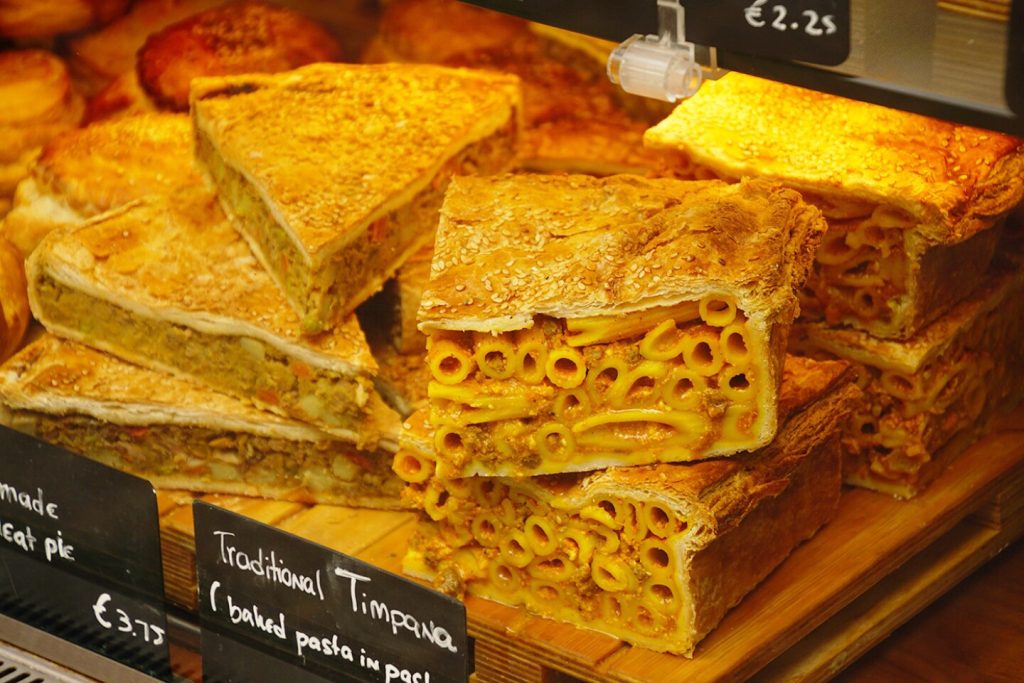
A culinary melting pot
Maltese cuisine is a reflection of the island’s diverse history, blending Mediterranean, North African and Sicilian flavours. Traditional Maltese food is hearty and rustic, with an emphasis on locally sourced ingredients such as rabbit, fish and vegetables. One of the most iconic Maltese dishes is fenkata, a rabbit stew slow-cooked with garlic, wine and herbs. It is traditionally enjoyed as part of a communal meal with family and friends.
Another beloved Maltese delicacy is pastizzi, flaky pastries filled with ricotta or mushy peas. These savoury treats are sold at street stalls and bakeries throughout the islands, making them a favourite snack among locals and visitors alike. New versions can include chicken as well. Maltese bread, known as Ħobż tal-Malti, is also an integral part of the local diet. It is typically served as ftira, a flatbread sandwich stuffed with tuna, olives, capers and tomatoes and is a staple of Maltese picnics and beach outings. Another big shout is the typical Timpana.
Fish is also a key component of Maltese cuisine, with dishes such as lampuki (dorado) pie, octopus stew and fried bakkaljaw (salted cod) popular in local households. The fishing village of Marsaxlokk, with its vibrant market and colourful luzzu boats, is a popular destination for seafood lovers. Maltese desserts, too, are a treat for the senses, with imqaret (date-filled pastries), kannoli (ricotta-filled tubes) and qarabali (pumpkin pie) providing a sweet finish to any meal.
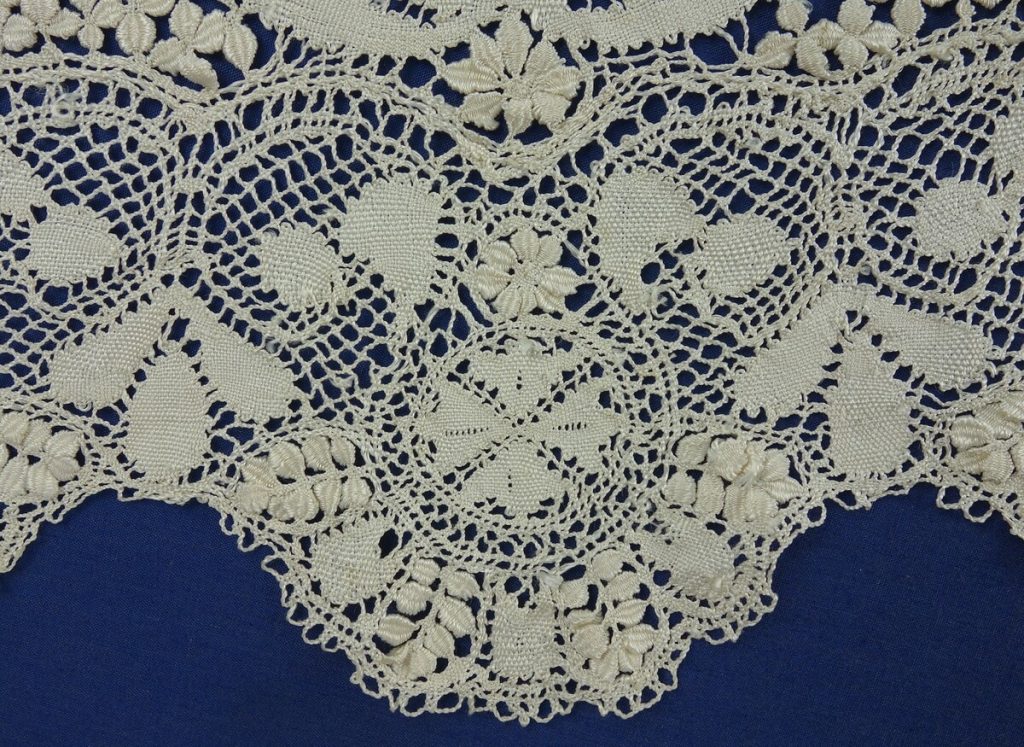
The region’s traditional arts and crafts are a living legacy
Malta is also renowned for its traditional arts and crafts, which have been preserved and passed down through generations. Lace-making, introduced by the Knights of St. John, remains one of the island’s most cherished crafts. Known as bizzilla, Maltese lace is characterised by its intricate patterns and delicate designs, often used to adorn clothing, household linens and religious vestments. Gozo, in particular, is famous for its lace-making tradition and visitors to the island can witness lacemakers at work in the village of Għarb. Even the late Queen Elizabeth II (at the time The Duchess of Edinburgh) visited “Lace House” located on Pjazza Tax-Xelina in Sannat during her visit to the islands in 1951.
Another craft closely associated with Malta is the production of filigree jewellery, a technique that involves twisting fine threads of gold or silver into intricate designs. Maltese filigree is a popular souvenir and remains a symbol of the island’s artistic heritage. Pottery, glass-blowing and weaving are also important traditional crafts, with local artisans continuing to produce unique handmade items that reflect the island’s cultural identity.

A symbol of national identity
The Maltese language, or Il-Lingwa Maltija, is a crucial element of Maltese culture and identity. As the only Semitic language in the European Union, it is a testament to the island’s Arab heritage, with influences from Italian, Sicilian and English. Maltese is a language of contrasts, with its Arabic roots evident in words and grammar, while its Latin-based script and vocabulary are drawn from European languages. Maltese poetry and literature have flourished over the years, with authors such as Dun Karm Psaila and Oliver Friggieri playing significant roles in shaping Maltese literary identity.
Maltese proverbs, known as qawl, also reflect the wisdom and humour of the island’s people. Many of these sayings encapsulate universal truths about life, love and hardship and they continue to be passed down through generations.
A proud cultural heritage
The Maltese culture is a rich mosaic of history, religion, language and tradition. Despite its small size, Malta boasts a deep and varied cultural heritage that reflects the island’s complex history of conquest and resilience. Whether through the lively festas, the unique Maltese language, traditional arts and crafts, or its delicious cuisine, Maltese culture is a proud expression of the island’s identity. As Malta continues to modernise and embrace global influences, it remains deeply rooted in the traditions and customs that have defined its people for centuries, offering visitors a glimpse into a truly unique cultural experience.
Our part
Frank Salt Real Estate is a proudly Maltese company and one of Malta’s oldest. With more than 55 years of history and representation on both Malta and Gozo through 16 offices, we represent and facilitate the buying and selling of some of the archipelago’s most iconic and historic homes. We have an extensive collection of notable palazzos, farmhouses and houses of character for sale and if you are interested in becoming the proud owner of one of these heritage homes, we will be too happy to accompany you on a viewing.