




 Back to Blogs
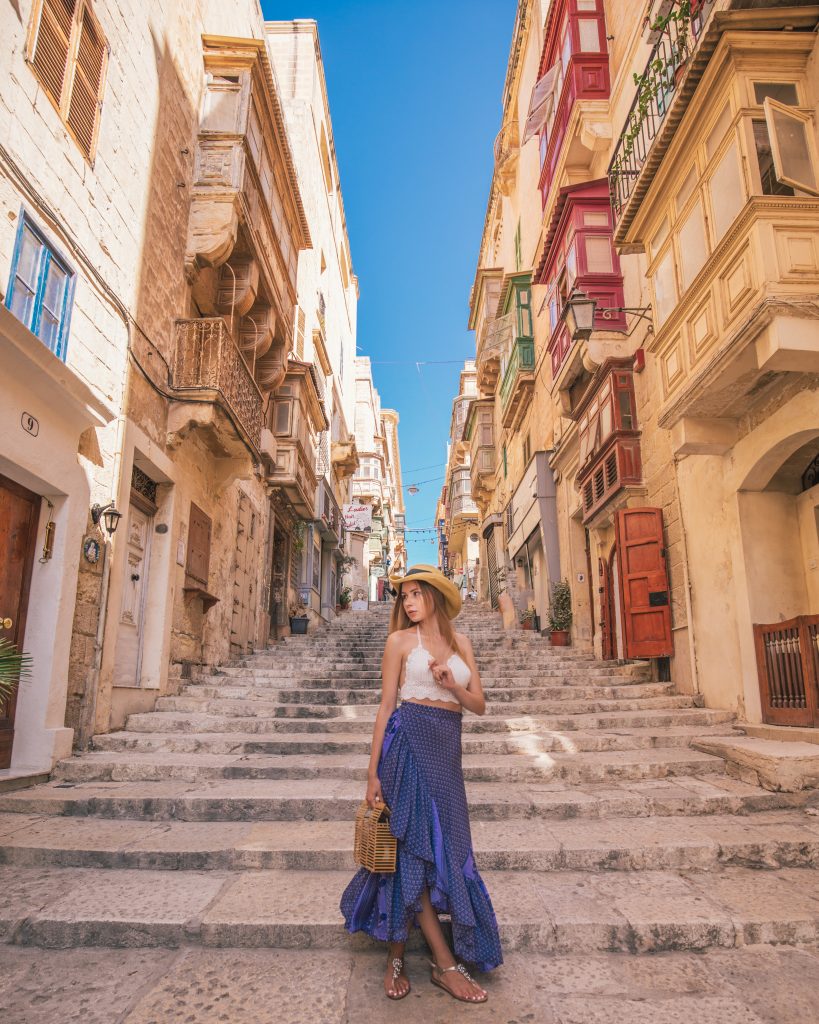
Malta’s building environment has always carried its past in plain sight. In recent years, growing awareness of Malta’s architectural heritage has encouraged a renewed focus on preservation. There is broad and genuine appreciation – among both locals and foreign residents – for the value of this country’s immensely rich built heritage and the role it plays in defining its character. Today, the importance of protecting and restoring Malta’s past treasures is widely recognised and increasingly regarded as an essential, shared priority.
Walk through any village core and you will see traditional Maltese architecture that displays weathered limestone, charming street-facing gallerija or timber balconies and patterned tiles, followed a few steps later by a newly completed block of apartments with geometric designed facades. The contrast can seem stark, yet this coexistence has become part of how Malta expresses itself: a place where long-standing heritage and modern convenience can meet in everyday life rather than as two separate worlds.
Heritage coveted
No-one can argue the fact that some of Malta’s historic homes were definitely created to be showpieces, but for the most part townhouses of age, houses of character, farmhouses and even majestic palazzos that are scattered across the islands were primarily built to serve families, enhance livelihoods and embrace village rhythms that preceded today’s frenetic pace of life. Even after the passing of time their thick walls still temper the fierce summer heat and central courtyards continue to act as the social heart of many of these properties. These features are not decorative additions, but reminders of how architecture once responded directly to climate, practical living and even serving the surrounding community.
The reawakened interest in restored properties in Malta and Gozo has increased dramatically. Buyers interested in heritage homes are looking for authenticity and elements that have a tangible link with the past. This can be features such as traditional tiles, arches, feeding troughs and even pigeon coups. Many of these quirky features are often left untouched but restored and cleaned up and proudly shown off to any visiting guests.
The shift from preservation to thoughtful renewal
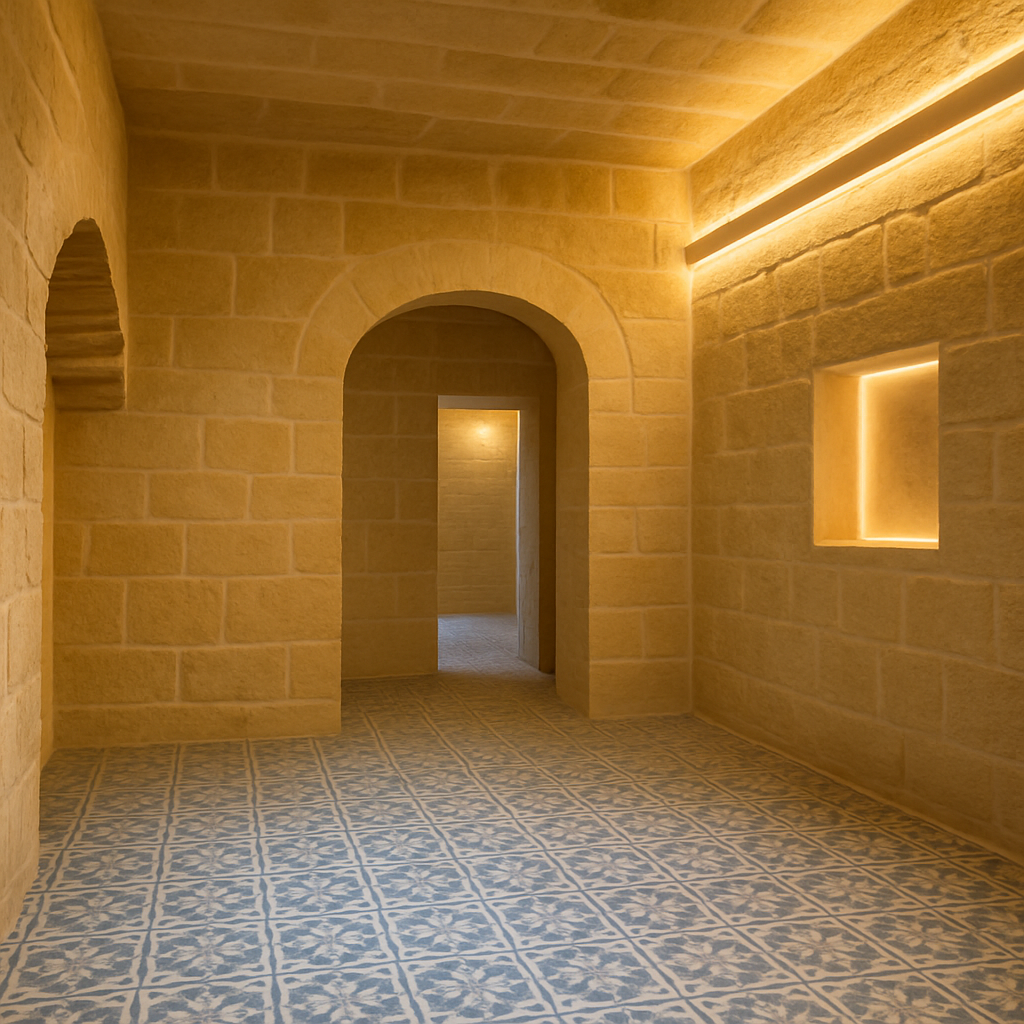
What has changed in recent years is not the affection for these homes, but the expectations surrounding them. Restoration is rarely about returning a property to a museum-standard snapshot of the past. Instead, property renovation in Malta has grown into a field that blends craft with practicality. Owners want to retain details like stone slabs, kileb, or patterned tiles. But they also expect insulation that genuinely works and plumbing that can cope with modern demands. They look for contemporary lighting solutions that serve more than one purpose: something beyond simply illuminating a space. Think of subtle or coloured lighting that can add to the mood of a room. Other lighting fixtures can cast patterns on textured walls and even form part of a room’s overall décor. Other lights are integrated into mirrors and wall fixtures, while some are used to highlight architectural features such as columns, niches or even statues inside homes or in gardens.
In many ways, this shift has made older homes more appealing to a broader audience. A carefully upgraded farmhouse or townhouse can offer a distinctive living experience without requiring its owners to compromise on comfort. A mill room converted into a kitchen, an old cellar reimagined as a work space or gym or a roof converted into a terrace with modern amenities can breathe new life into structures that have already lived several lifetimes
Why many locals still choose modern homes
Yet, for all the romance of heritage, many residents, especially the younger generation, continue to choose new-build properties. This choice is less about rejecting tradition and more about contemporary living and primarily about affordability and convenience. Newly built apartments are not only easier to maintain but also more accessible for first-time buyers and often come with secure underground parking, energy-efficient systems and layouts that favour contemporary open-plan living. Maintenance costs are lower and there is usually no need for initial upgrades, unlike the substantial work often required on an older heritage building.
It is also worth acknowledging that lifestyle changes play a huge part. Long working hours and limited free time make the simplicity of modern Mediterranean homes very appealing. These properties offer clean lines, considered lighting, practical materials and compact outdoor spaces that are easy to care for. As many of these are lock-up-and-go units, for most buyers, practicality simply takes precedence over character.
New developments responding to context
While older properties tell Malta’s long story, new developments now reflect its current chapter. Contemporary architects are increasingly attentive to context, often drawing subtle inspiration from iconic design elements while others use limestone cladding to soften modern facades. Some well-known examples can be found in the Sliema and St Julian’s area, where familiar colours and contemporary versions of the Maltese balcony were incorporated in a complimentary way into several buildings’ design without simply mimicking it.
In neighbourhoods where conservation rules restrict extensive alterations, developments in outlying areas can help to relieve the pressure on these historic zones. Rather than forcing older buildings into shapes they were never intended to take, new apartment blocks and mixed-use projects further away give buyers alternatives that provide a better chance to keep historic village cores intact.
Heritage and modernity can support one another
In the past it would have been easy to describe Malta’s real estate sector as a tug-of-war between old and new, but the reality is that it is becoming a lot more complementary. Heritage properties are now preserved not because they are frozen in time, but because they are continuously and sensitively adapted. Modern buildings now succeed because they address the demand for affordable housing and reinterpret key elements of traditional Maltese architecture rather than disregarding them as in years past.
Together, these two strands shape an environment where someone can admire a baroque facade while living in a building that uses smart systems to help manage modern life. This proves that modernisation does not mean you have to erase legacy.

How Frank Salt Real Estate helps navigate both worlds
For buyers who are unsure where they fit in along this spectrum, professional guidance matters most. Frank Salt Real Estate has long been involved in helping clients explore both heritage properties and contemporary developments. Our consultants understand the distinctive demands of clients who desire traditional Maltese houses as much as the practical requirements of those who want brand new apartments.
Our company’s holistic circle of services is particularly valuable in this regard. Clients interested in restoration projects will benefit from our intimate knowledge of incentives made available by the government and secondly gain access to trusted architects, project managers and contractors who understand both aspects of preservation and modern living. This support can make all the difference between a project that feels overwhelming and one that is ultimately rewarding.
Those who prefer modern properties receive just as much attention. We assist with identifying suitable developments, handle all legal processes and manage your after-sales needs. We can assist buyers through our Home Interiors Division to refurbish and upgrade existing properties or help with the completion of shell apartments right up to the last final touches. This we achieve through project managing and coordinating with a multitude of service providers until your home is ready to move into.
Our role is not simply to help clients choose between past and present, but to ensure that you experience a smooth, informed and enjoyable property journey with us from the first viewing right to occupation day.
A market defined by balance and choice
Malta’s real estate market continues to evolve, yet its character remains grounded in a simple truth: both tradition and innovation are guaranteed a place here. Whether restored or newly built, homes across the islands share a common thread of the Mediterranean lifestyle that values community and a sense of belonging. We can unashamedly say that with this new balance between revering heritage and wanting modernity, Malta has found not a compromise but a way of living that honours days past while welcoming the day of tomorrow.