
The reasons for choosing Malta are practical: as an EU member state with German-level legal certainty, a tax system that rewards structured planning and a property market that has kept climbing.
For German nationals, Malta also offers an English-speaking environment, Mediterranean lifestyle, EU familiarity and a property market that has shown resilience while many European real estate markets have stalled somewhat.
Malta has been a full EU member since 2004, which means German citizens already hold the right to live, work and do business there without a visa or permit of any kind.
There is no bureaucratic gatekeeping at the border, no quota system and no need to justify the move to an immigration office.
Yes. English is one of Malta’s official languages, alongside Maltese, and it is widely used in business, administration and many international workplaces.
In sectors such as finance, gaming, tech, tourism, real estate and professional services, English is often enough to get started. Maltese can still be helpful for integration and for some local-facing roles.
As a general guide for 2026, a single person can expect to budget around €1,550 to €1,650 per month, while a couple can expect a realistic monthly budget of around €2,200 to €2,400.
Rent is usually the biggest expense. Sliema, St Julian’s and Gżira tend to command higher rents, while Gozo and some southern or quieter localities can offer better value.
Yes. German citizens can rent property in Malta and Gozo. Many people choose to rent first so they can understand the island, compare locations and decide whether they want to buy later.
Renting can also be useful before committing to a primary residence, SDA property or long-term residency route.
As an EU citizen, a German buyer does not need an Acquisition of Immovable Property (AIP) permit to purchase a primary residence in Malta or Gozo.
This is the single most important fact to understand before researching anything else, because much of the generic advice online is written for non-EU buyers and does not apply in the same way.
Malta has a Mediterranean climate, with long, hot summers, mild winters and plenty of sunshine throughout the year.
For German relocators, the weather is one of the major lifestyle advantages. Winters are generally much softer than in Germany, while spring and autumn are especially popular for outdoor living, coastal walks, dining out and exploring Malta and Gozo.
Malta is generally considered a safe place to live, especially when compared with many larger European cities.
As with any country, normal precautions still apply. It is sensible to take care of personal belongings in busy areas, avoid leaving valuables in cars and get to know the character of different neighbourhoods before deciding where to rent or buy.
Yes. Malta has a German-speaking community, with cultural, social and professional connections that can make the move feel easier.
New arrivals can usually find German-speaking groups, social events and informal networks, especially around the more international areas of the island.
Malta has both public and private healthcare, and some private clinics and practitioners may offer German-speaking support.
Availability can change, so it is best to ask directly when booking an appointment and confirm that the doctor is properly registered to practise in Malta.
Many German citizens are looking past the usual shortlist of Spain, Portugal and Austria and visiting Malta for a closer look.
The reasons for choosing Malta are practical: as an EU member state with German-level legal certainty, a tax system that rewards structured planning and a property market that has kept climbing, it is in contrast with the rest of Europe where many real estate markets have stalled somewhat.
This article sets out what a German national needs to know before renting or buying in Malta or Gozo, how residency status affects that decision, what happens to gains when a property is eventually sold and where the market currently stands.
Before relocating from Germany, it helps to understand the everyday numbers: rent, utilities, groceries, transport, healthcare and lifestyle costs.
Buyers from Germany tend to gravitate towards a handful of areas, each suited to a different purpose.
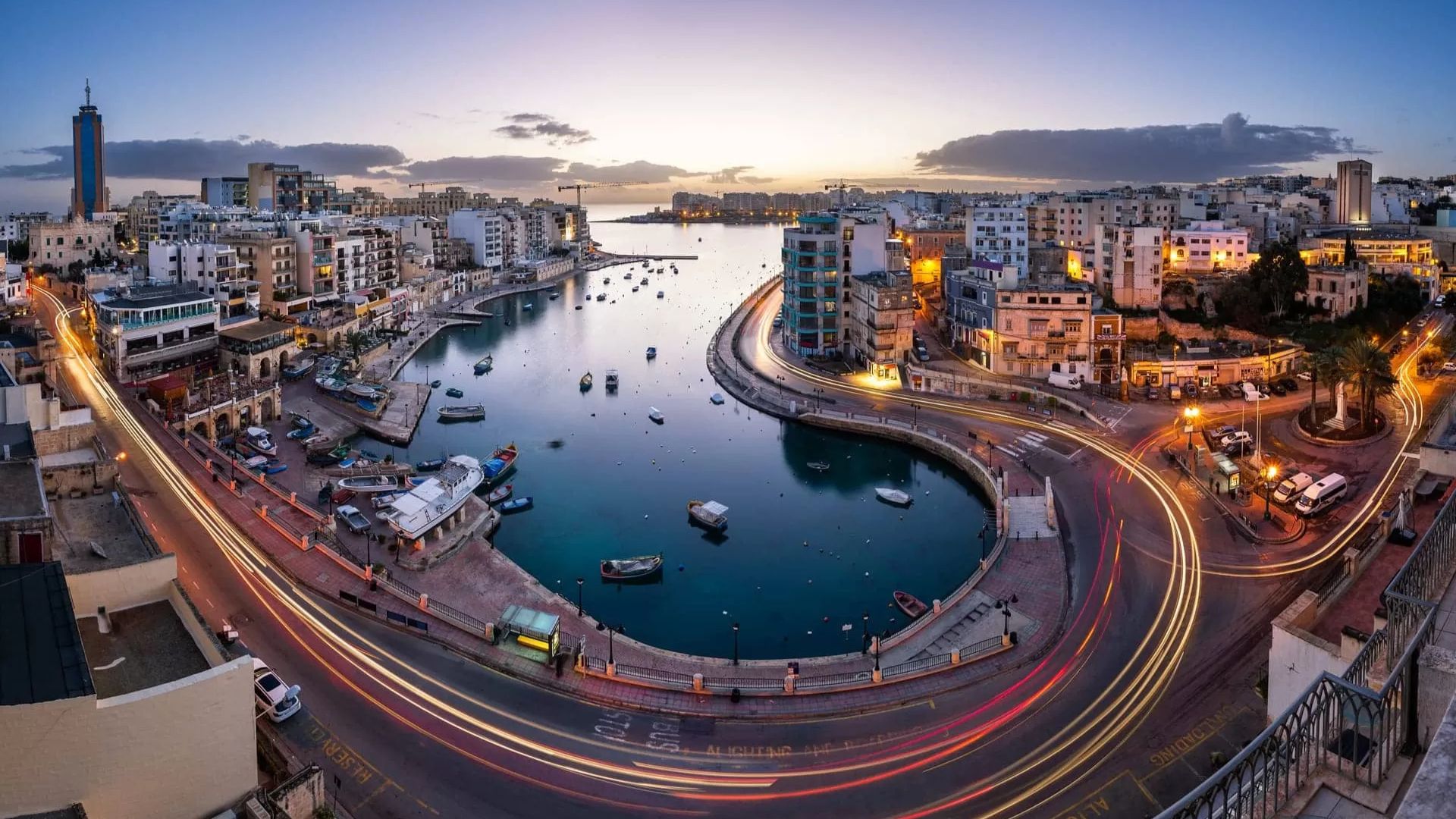
Sliema and St Julian’s offer the closest equivalent to city living, with cafés, offices, seafront apartments, shopping and a strong rental market.
These areas remain popular with professionals working in finance, gaming and tech.
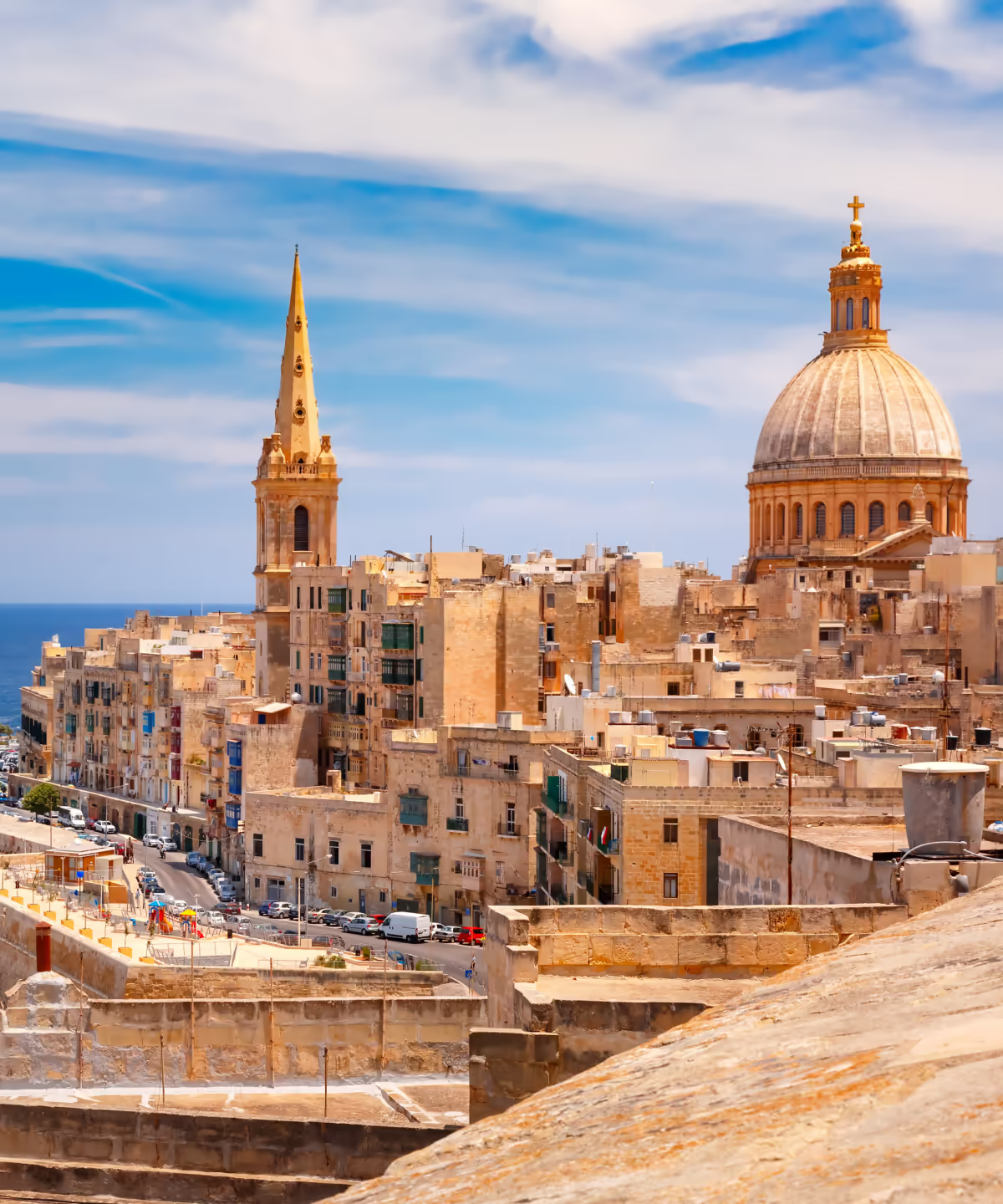
Valletta appeals to those drawn to restored period property within a UNESCO-listed setting.
In some cases, reduced stamp duty can also apply to restoration projects, which makes the capital especially interesting for buyers with a heritage-property mindset.
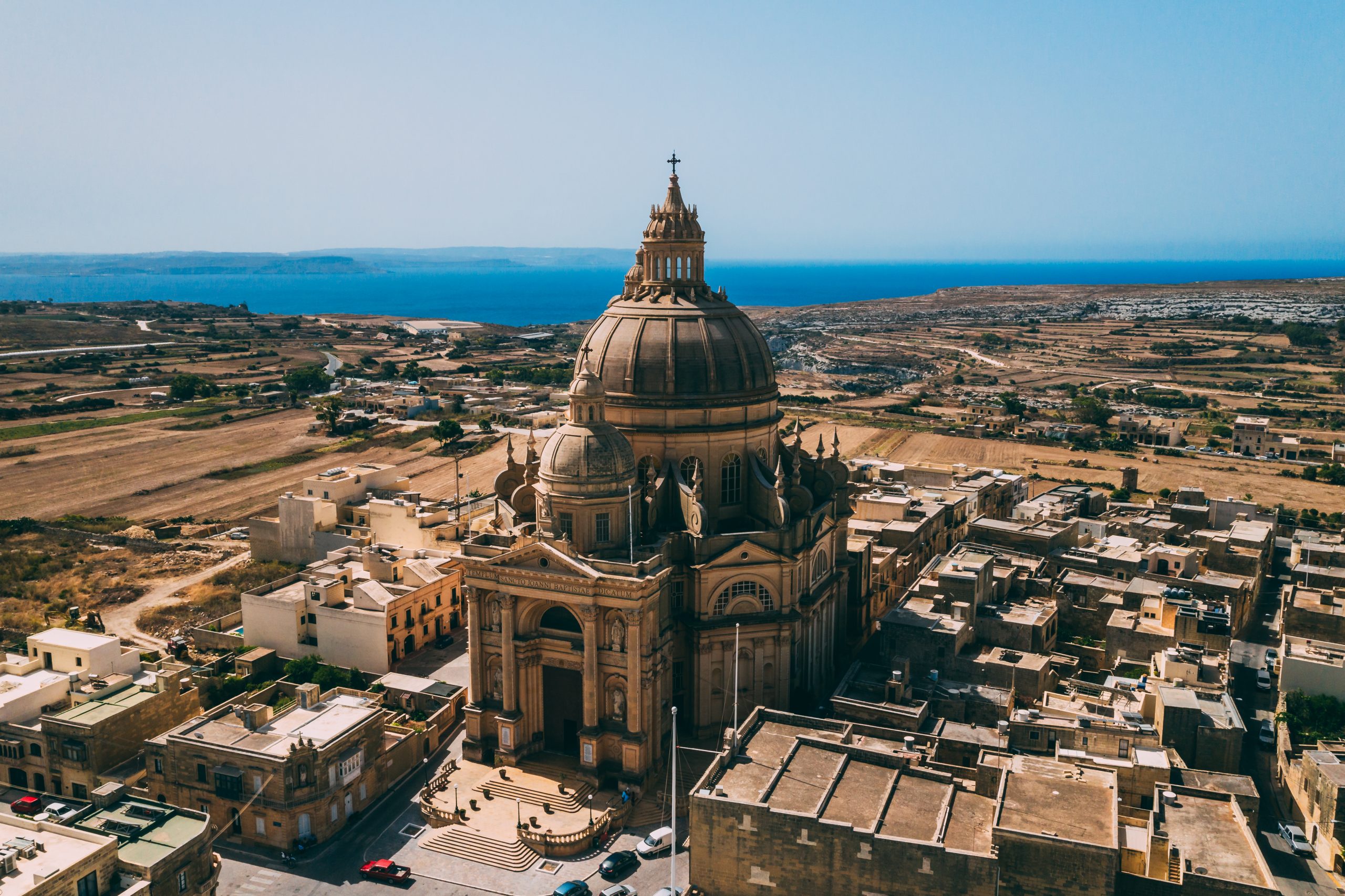
Gozo has become increasingly popular with German buyers who want space, countryside, sea views and a slower rhythm.
It also has its own lower property thresholds under the TRP and noticeably calmer day-to-day life than the main island.
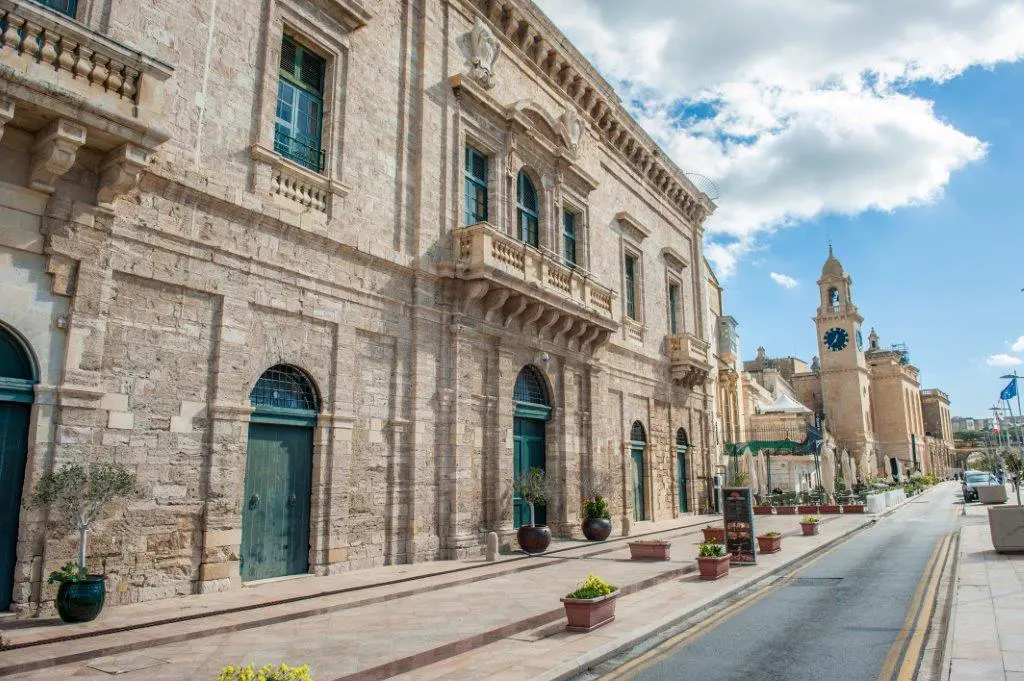
The Three Cities, Birgu, Senglea and Cospicua, offer restored period property, harbour views and a more historic residential setting.
Like Valletta, they attract buyers who value architecture, character and access to the Grand Harbour area.

Share a few details about your plans and the Frank Salt team will guide you towards the right next step.
Whether you are considering renting first, buying a primary residence, exploring SDA properties or understanding where to begin, a direct conversation can save time and avoid confusion.
Complete the form below and our Client Services team will get back to you.
As an EU citizen, a German buyer does not need an Acquisition of Immovable Property (AIP) permit to purchase a primary residence in Malta or Gozo.
This is the single most important fact to understand before researching anything else, because much of the generic advice online is written for non-EU buyers and does not apply in the same way.
Where it gets more specific is on second homes. If a German citizen has not been continuously resident in Malta for five years, a permit is required to buy a second property outside a Special Designated Area (SDA).
Examples of Special Designated Areas are Portomaso, Tigné Point, Fort Cambridge or Pender Gardens, but there are many more.
Inside these zones, any nationality can buy without a permit, with no restrictions on the number of properties owned and no limitation on renting them out.
Once five continuous years of legal residence have passed, a German citizen gains the same property rights as a Maltese national: full freedom to buy, sell and let, with no permit requirement of any kind.
For those planning a longer-term move rather than a holiday flat, this is a strong argument for establishing residency early rather than treating the first purchase as a one-off transaction.
Because Germany is an EU and EEA member, German citizens are not eligible for programmes built for non-EU applicants, such as the Malta Permanent Residence Programme.
What does apply and what is genuinely underused by German buyers, is The Residence Programme (TRP), a scheme designed specifically for EU, EEA and Swiss nationals who want to make Malta their tax residence without renouncing freedom of movement within the Union.
Under Malta’s The Residence Programme (TRP), a beneficiary is generally taxed at a flat 15% rate on foreign-source income that is remitted to Malta, subject to a minimum annual tax of €15,000 per family.
Foreign-source income that is not remitted to Malta is generally not taxable in Malta.
Foreign-source capital gains are generally not taxable in Malta even if the proceeds are brought to Malta, provided the individual remains non-domiciled in Malta.
Maltese-source income remains taxable in Malta under the ordinary rules.
For Germans who do not expect to remit significant foreign income, the alternative is Ordinary Residence, which carries no minimum tax charge but taxes Malta-sourced income at the normal progressive rates, up to 35%. Which route makes sense depends entirely on personal income structure and this is a conversation worth having with a Maltese tax adviser before any property is purchased, not after.
Instead of a capital gains calculation based on profit, most transfers are subject to a final withholding tax charged on the transfer value of the property, currently set at a standard rate of 8%.
Most transfers are subject to a final withholding tax charged on the transfer value of the property, currently set at a standard rate of 8%.
5% if the property is sold within five years of purchase and was not bought as a main residence.
2% if it was the seller's sole residence and is sold within three years.
A full exemption applies if it was owned and occupied as a main residence for at least three consecutive years before sale.
There is no annual property tax in Malta at all, which is a detail Germans accustomed to Grundsteuer tend to appreciate once it is pointed out.
The numbers make a compelling case for Malta.
The nationwide Residential Property Price Index rose 6.1% year-on-year in the fourth quarter of 2025, following increases of 5.7%, 5.6% and 5.7% in the preceding three quarters.
This marked the fifth consecutive quarter in which annual price growth exceeded 5%, pointing to sustained momentum in the residential market.
Transaction activity tells a similar story. Residential property transactions across Malta increased by 5.9% in 2025 to 13,339, while the total value of transactions rose by around 12.4% to €3.97 billion.
Apartments, the segment most relevant to many overseas buyers, led price growth in the final quarter of 2025 with a 6.2% annual increase.
None of this guarantees future performance, and German buyers should treat these figures as one factor among many when evaluating an investment, but the resilience of Malta's property market through recent years of economic uncertainty and higher European interest rates is notable.
Navigating AIP rules, SDA eligibility, residency thresholds and withholding tax bands is not something to do from a blog article alone.
Frank Salt Real Estate has operated since 1969 and is the country’s largest family-owned and managed real estate agency, with 20 branches and close to 200 consultants covering Malta and Gozo.
For German buyers, the advantage is the ability to handle the full chain: short lets through the holiday lets arm, long lets through the residential letting team and sales or acquisitions across both islands and all major price brackets.
Useful for buyers who want to visit Malta, explore areas and understand day-to-day life before committing to a purchase.
View Holiday Lets →A practical option for German nationals who want to establish themselves in Malta before deciding where to buy.
View Rentals →Sales and acquisitions support across Malta and Gozo, including primary residences, investment properties and SDA options.
Explore Property →The company’s relocation and concierge service can coordinate tax and legal guidance, property management and home interiors, which matters when the buyer is trying to align the property purchase with a residency application and a tax position. The value is not simply finding a flat or house; it is having a single point of contact who understands how the purchase, residency route and long-term plan need to fit together.
For a German investor or relocator, Malta is no longer a curiosity. Germany's tax environment is not becoming simpler and many traditional retirement or second-home destinations are struggling with either oversupply, bureaucracy or weaker growth.
Malta offers a German citizen full property and residency rights without non-EU friction, a tax structure that rewards planning and a property market that has rewarded patience for more than five years.
The sensible next step is not to browse listings in isolation, but to have a direct conversation. German buyers should contact Frank Salt Real Estate through one of its 20 branches or its Client Services Division online, explain their circumstances, and view qualifying properties both inside SDAs and beyond them with a clear, honest assessment of the ownership, residency and tax implications.