
Property For Sale
First Time Buyer Package
First Time Buyer’s Guide
Buy and Sell Through Us Offer
Buy And Sell Guide
Bank Loans
Property For Rent
Residential Letting Services
Flat Sharing
How To Be A Good Tenant
Malta Holiday Lets
Malta Residence Programmes
Rental Investment
Register Your Property
Explore Our Sole Agency Packages
Required Documents For sale Of Property
Energy Performance Certificates
Property For Sale/Rent
Commercial Property Services
Useful Information
Commercial Property Classes
Why Relocate Your Business To Malta?
Major Office Developments In Malta
Property For Sale
First Time Buyer Package
First Time Buyer’s Guide
Buy and Sell Through Us Offer
Buy And Sell Guide
Bank Loans
Property For Rent
Residential Letting Services
Flat Sharing
How To Be A Good Tenant
Malta Holiday Lets
Malta Residence Programmes
Rental Investment
Register Your Property
Explore Our Sole Agency Packages
Required Documents For sale Of Property
Energy Performance Certificates
Property For Sale/Rent
Commercial Property Services
Useful Information
Commercial Property Classes
Why Relocate Your Business To Malta?
Major Office Developments In Malta
Explore traditional farmhouses in Malta, from historic rural homes with limestone walls and internal courtyards to restored properties adapted for modern living.
Farmhouses in Malta are original, historic rural properties built for agricultural living, combining residential space with working farm functions under one structure. Today, they are among the most distinctive property types available on the islands, defined by solid limestone construction, internal courtyards and architectural features shaped by practical use rather than decorative design.
The interest in farmhouses in Malta is driven by limited availability, structural character and their adaptability for modern living. Each property is individually built, meaning no two farmhouses are identical in layout, condition, or architectural detail.
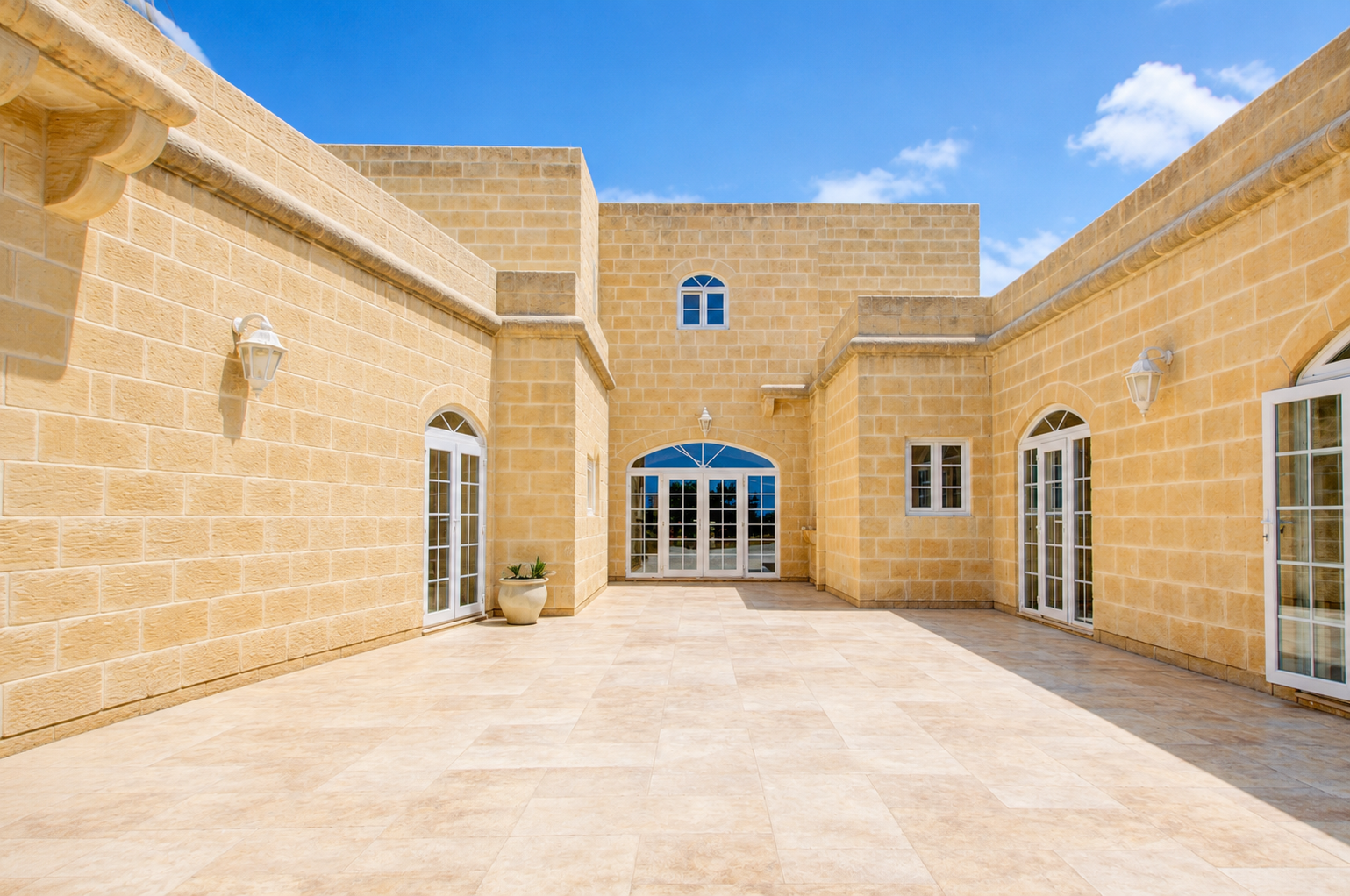
A Maltese farmhouse offers a form of property ownership that is fundamentally different from standard residential developments. These buildings were constructed over different historical periods, often using traditional masonry techniques that prioritised durability and function.
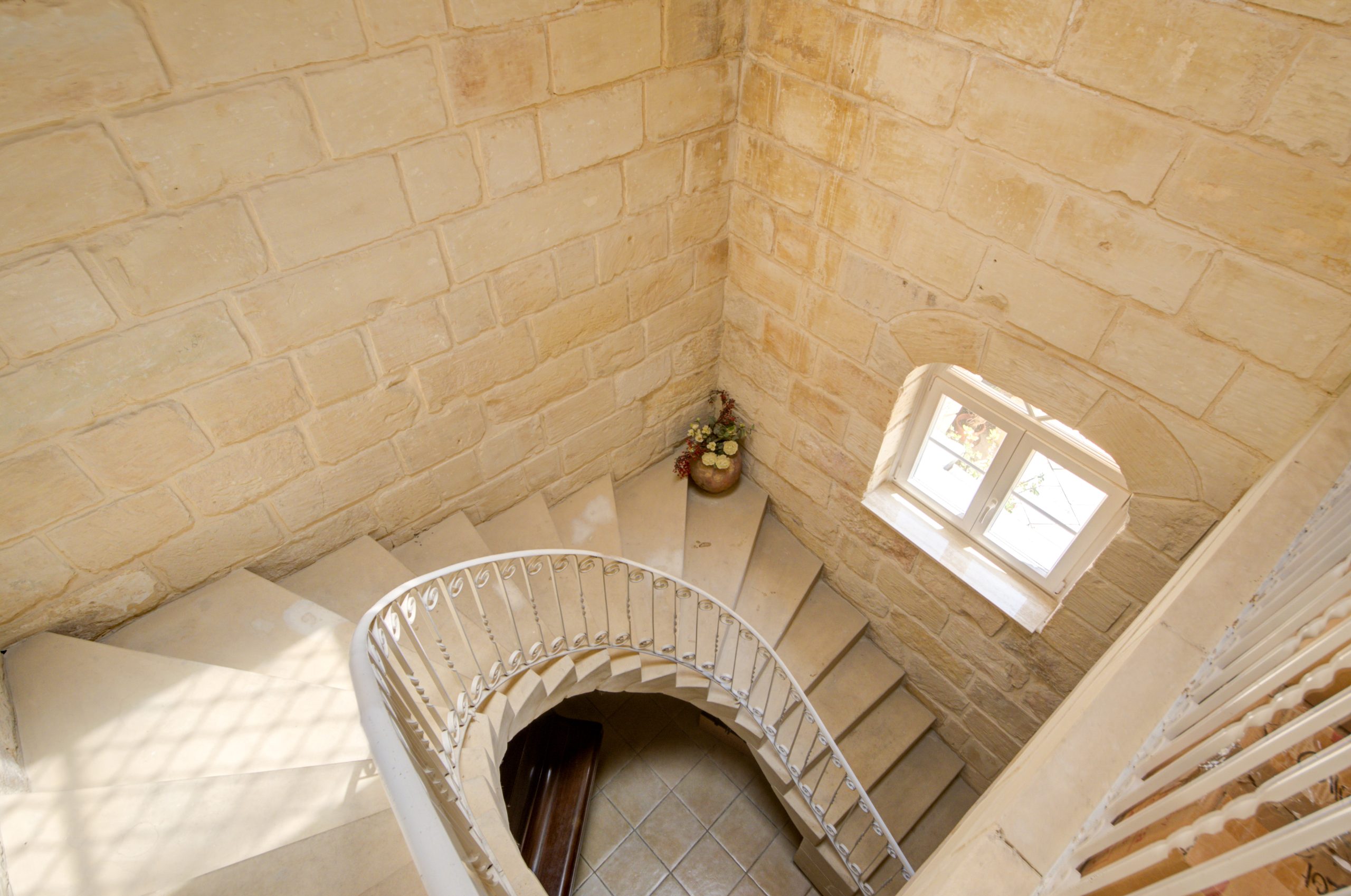
Common retained features include stone arches, thick load-bearing walls, internal courtyards, wells, animal troughs and recessed wall storage. These elements are not ornamental additions - they are part of the original structure.
The supply of farmhouses for sale in Malta is inherently limited. Unlike modern developments, they cannot be replicated at scale. Availability depends entirely on turnover within a fixed historical stock, which contributes to consistent demand from both local and international buyers.
Farmhouses were originally designed to accommodate people, animals and agricultural activity. This explains their generous proportions, high ceilings and practical internal layouts.
Typical architectural characteristics include:
Many properties also include internal courtyards, historically used for circulation, light and daily agricultural activity. These courtyards often form the central architectural feature of the home.
Most restored farmhouses retain their original spatial layout while introducing modern living standards.
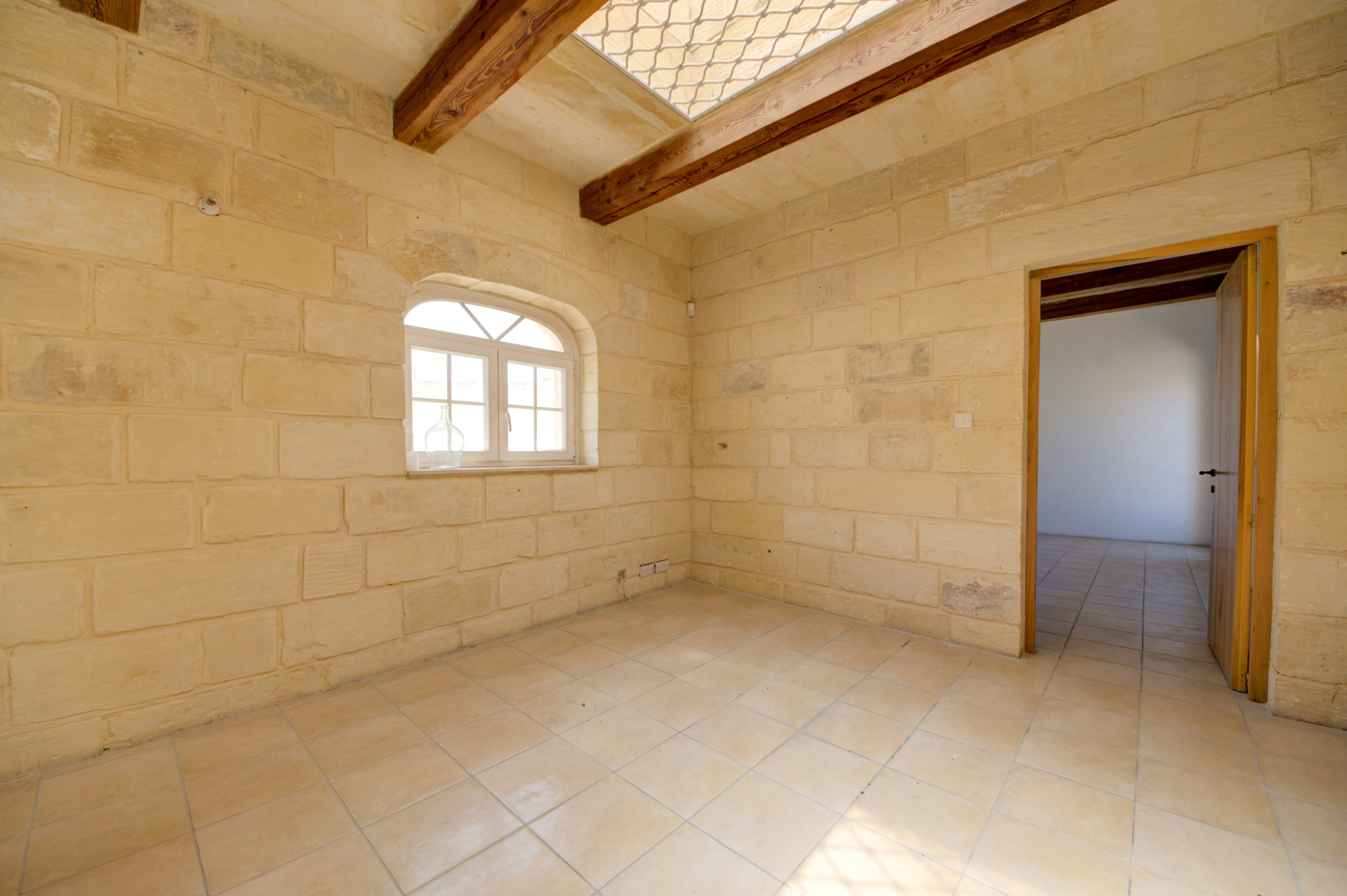
A common feature is the transformation of internal courtyards into usable year-round spaces. Many are enclosed with glass structures, creating naturally lit central areas that function as living rooms, dining areas, or even indoor gardens.
Outdoor space is a defining advantage. Farmhouses are typically set on larger plots than standard residential properties, allowing for:
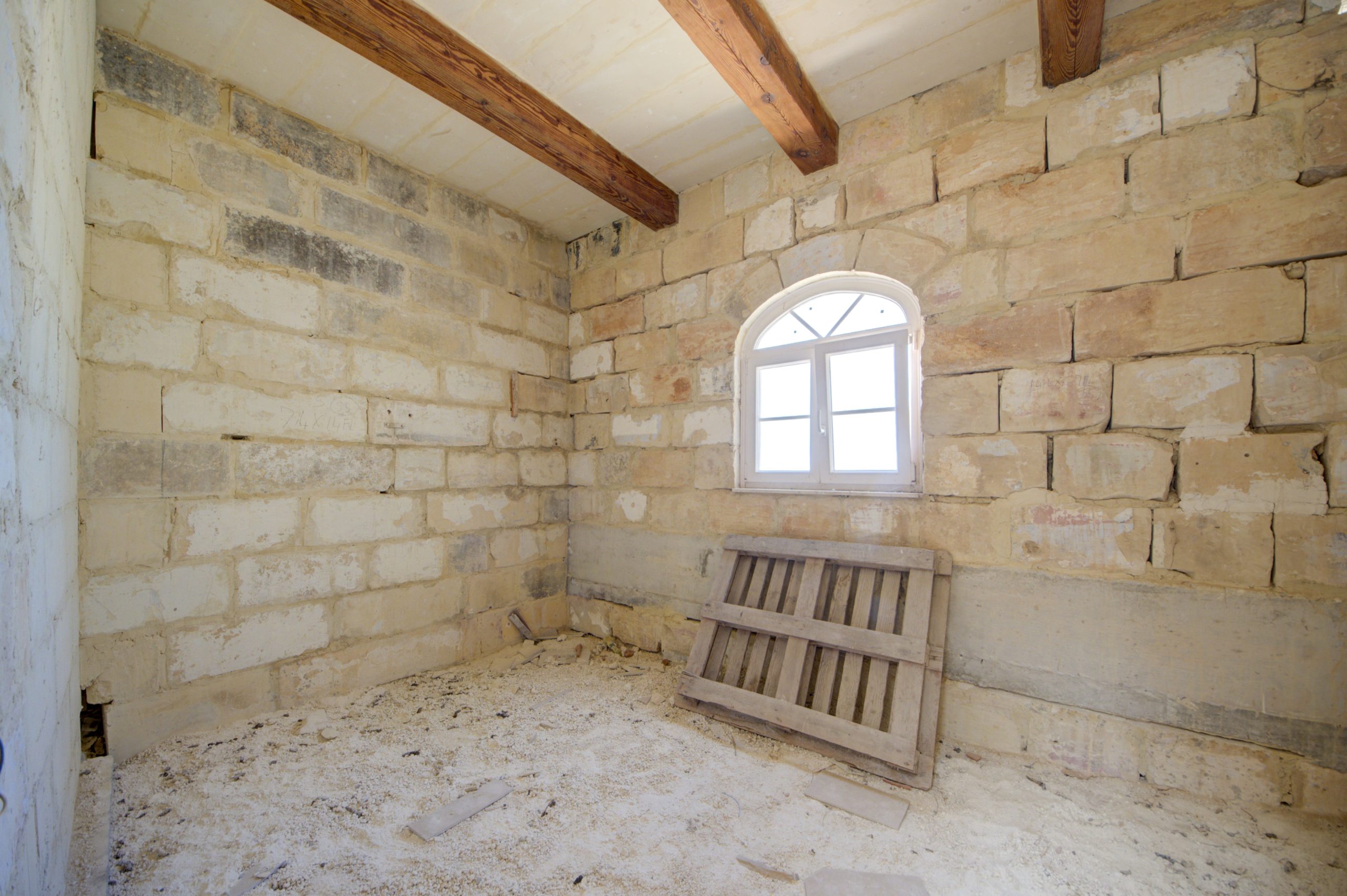
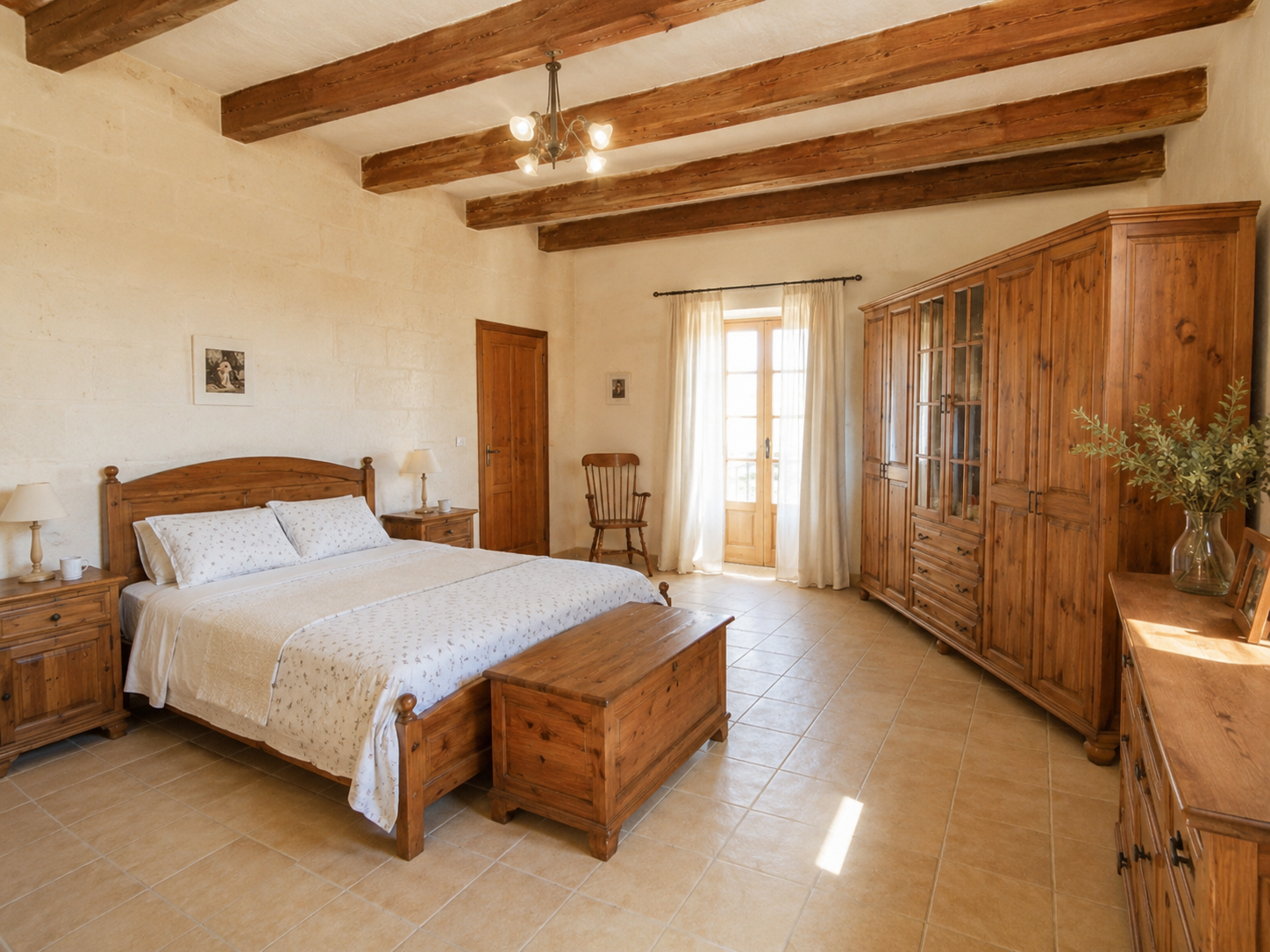
Material continuity is a key part of restoration. Limestone walls, flagstone flooring, timber beams, traditional Maltese patterned tiles and wooden shutters are often preserved or reinstated to maintain structural authenticity.
Farmhouses in Malta are used in a variety of ways depending on ownership goals and layout.
Some are retained as private residences used seasonally, while others are operated as short-term rental accommodation or boutique hospitality properties. Their scale and segmentation often allow for multiple functional zones within a single structure.
Many farmhouses include separate wings, annexes or converted outbuildings. These can be used for guest accommodation, remote working spaces or independent living areas. In larger properties, separate entrances provide additional privacy and flexibility for multi-use arrangements.
This adaptability makes them suitable for:
The value of a Maltese farmhouse is closely tied to its uniqueness. Each property is individually built and restoration outcomes vary significantly depending on condition and preservation quality.
Unlike standard property developments, valuation is influenced by:
Demand remains steady due to scarcity and the limited number of properties entering the market each year. This positions farmhouses as a niche segment within Malta’s residential property landscape, particularly for buyers seeking long-term use rather than uniform housing stock.
Purchasing and restoring a farmhouse in Malta can, in certain cases, qualify for a combination of fiscal incentives and grant schemes designed to encourage the rehabilitation of older residential stock and protected urban fabric. These measures are not automatic; eligibility depends on property classification, location, timing of purchase and the scope of works carried out.
Many farmhouses located within or adjacent to designated Urban Conservation Areas (UCAs) may benefit from targeted fiscal relief measures. UCAs are planning zones intended to protect historic streetscapes and encourage restoration rather than redevelopment.
Where a farmhouse or traditional property falls within a qualifying UCA or meets equivalent criteria (such as age or vacancy thresholds), the following incentives may apply:
These measures are designed to shift investment towards rehabilitation rather than replacement of existing structures, particularly in areas where traditional architecture forms part of the planning framework.
Separate from transaction-based tax relief, Malta operates grant schemes aimed specifically at physical renovation works on older properties, including traditional farmhouses.
Under current frameworks, eligible works may include structural restoration, internal finishing and upgrades that retain or reinstate traditional architectural features. Typical qualifying works include masonry repair, replacement of apertures in traditional style, roofing restoration and internal finishing consistent with vernacular design standards.
Depending on the scheme in force at the time of application, support may take the form of:
These schemes are generally time-bound and budget-dependent, with application windows and eligibility criteria set annually.
Additional support may be available for works that improve the energy performance of older residential buildings, including farmhouses. These programmes typically focus on:
Such schemes are usually income-assessed or regionally targeted and may operate alongside broader national renovation programmes aimed at improving building efficiency standards across the housing stock.
Incentives are most relevant when a farmhouse purchase involves significant restoration rather than minor cosmetic upgrades. Eligibility is typically assessed on a case-by-case basis and depends on classification, location, the nature of works and scheme timelines.
In practice, incentives are most relevant when a farmhouse purchase involves significant restoration rather than minor cosmetic upgrades.
Eligibility is typically assessed on a case-by-case basis and depends on:
Professional guidance is often required, as multiple schemes may overlap but are not always cumulative in full.
Yes, certain farmhouse purchases may qualify for stamp duty exemptions, reduced tax exposure on transfers and other reliefs when the property meets criteria such as being in a UCA, being over a certain age, or requiring restoration.
A UCA (Urban Conservation Area) is a protected planning designation. Properties within these zones may benefit from tax reductions and restoration incentives, but must also comply with stricter planning and conservation rules.
Yes, eligible restoration works on older residential properties, including farmhouses, may qualify for government grants or reimbursements covering a percentage of approved renovation costs, subject to caps and conditions.
Depending on the scheme, support can include percentage-based rebates (often 10%–18%) and capped grants that may reach up to approximately €54,000 per property for qualifying works.
No. Eligibility depends on multiple factors including property age, location, planning designation, type of works carried out and compliance with scheme rules and timelines.